
Concrete Estimates in 24 Hours
Get detailed concrete takeoffs and cost estimates delivered within 24 hours, depending on project size, drawing complexity, and scope.
Concrete is one of the most unforgiving scopes to underprice. Formwork, reinforcing steel, pour volume, finishing, and curing all carry costs that generic estimating consistently misses. Our concrete estimating services provide contractors and builders with precise, pour-ready numbers built directly from your structural drawings and project specifications.
Concrete Estimates in 24 Hours
Get detailed concrete takeoffs and cost estimates delivered within 24 hours, depending on project size, drawing complexity, and scope.

Complete Concrete Scope Coverage
We estimate slabs, footings, foundations, walls, columns, beams, elevated decks, site concrete, rebar, formwork, and other concrete-related components.

Pour-Ready Quantity Takeoffs
Receive detailed quantities for concrete volume, reinforcing steel, formwork, joints, and related materials.

Concrete scope errors don't surface at bid review; they surface when your ready-mix supplier delivers short, your rebar order comes up light, or your formwork crew runs out of material mid-pour. By then, rush orders eat your margin, and schedule delays compound. Precise concrete quantity takeoffs eliminate these surprises before the first truck rolls.
Slab-on-grade, elevated decks, foundation walls, columns, beams, and tilt-up panels all carry different material costs, labor productivity rates, and formwork requirements. Blending them into a single concrete rate gives a number accurate for none of them. We estimate all pour types individually, so your concrete bid reflects actual scope complexity, not an averaged approximation.
Accurate concrete estimating requires more than measuring plan areas and multiplying by thickness. Waste factors, overpour allowances, pump setup costs, vibration labor, curing compound coverage, and joint-sealing materials all feed into your true concrete cost. Our concrete estimators understand how concrete work actually gets priced and built.
From foundation to finish, we deliver professional concrete cost estimating services so you bid with confidence, not guesswork.
Get Your Concrete EstimatesWe give concrete contractors precise, element-by-element quantity takeoffs and cost estimates, built from structural drawings, so your bid is accurate, competitive, and fully defensible from day one.
We give GCs the complete concrete cost packages covering every pour type, forming system, and reinforcing scope, so your concrete buyout starts with numbers that hold through construction.
We help structural engineering firms provide clients with early, concrete cost feedback, keeping structural system decisions aligned with project budgets before design development locks in material and forming choices.
We give developers accurate, concrete cost data for podium structures, parking decks, and foundation systems, anchoring pro formas with real measured quantities before capital commitments are finalized.
We support CMs with independent concrete quantity verification and cost validation, giving owner's rep teams a reliable second set of eyes on every concrete proposal they receive.
We partner with construction estimating companies that need reliable concrete takeoff production, delivering measured, auditable quantity data that integrates directly into your cost models without remeasurement on your end.
We estimate industrial concrete scopes, equipment pads, containment structures, foundation systems, and heavy slab work, with the load requirements and specification depth that industrial projects demand.
A proven workflow that turns your project plans into accurate, actionable, concrete budget estimates.
Upload your drawings and project documents.
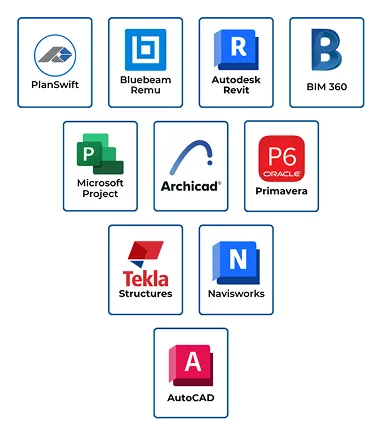
We analyze every detail of your project scope using industry-standard tools, ensuring nothing is missed
We build a precise, itemized estimate covering all materials, labor, and trade-specific costs.
Your completed estimate lands in your inbox.
From foundations and slabs to structural concrete and large commercial pours, our estimators factor in local labor rates, material costs, and project-specific quantities to deliver accurate estimates for more competitive bids.

With nearly a decade of hands-on experience in construction cost estimating, David has helped hundreds of contractors, subcontractors, and developers across the USA and Canada bid smarter, win more, and build profitably. Working with industry-standard tools including Bluebeam, PlanSwift, and RSMeans, David brings the same level of precision and speed to every estimate, whether it's a single-trade subcontractor bid or a full commercial project breakdown.
We needed a concrete estimate for a large commercial foundation project, and Federal Estimating delivered a highly detailed takeoff and cost analysis. The quantities for concrete, reinforcement, and formwork were clearly organized, making it easy for our team to prepare a competitive bid.
Federal Estimating provided concrete estimating services for a multi-family residential development in Nevada. The estimate was thorough, professional, and covered all major concrete components. Their attention to detail reduced the risk of material shortages and budgeting mistakes.
Our company has worked with several estimating providers, and Federal Concrete Estimating Company stands out for quality and reliability. They prepared an estimate for a warehouse slab and foundation package that was accurate and easy to review.
The cost of a concrete estimate depends on project scope and complexity. Most professional estimating firms price based on project size; smaller residential jobs like driveways or slabs may have flat-rate pricing, while larger commercial pours are typically scoped per project.
But the more important question is: what does a bad estimate cost you? An inaccurate takeoff leads to overbidding and losing the contract, or underbidding and losing money on the job. A professionally prepared estimate protects your margins before work ever begins.
Asking the right questions upfront ensures the estimate you receive is actually usable for bidding:
What's included in the scope? Confirm the estimate covers formwork, rebar, pour, finishing, and curing, not just materials.
What mix design are you assuming? PSI requirements vary by application and directly affect cost.
Is the waste factor included? A professional estimate should account for 5–10% overage.
What's the turnaround time? Confirm delivery aligns with your bid deadline.
Are labor costs included? Some estimates cover materials only; know the difference before you bid.
A professional concrete estimate should cover:
Volume calculations: cubic yards per pour zone, accounting for slabs, footings, walls, and columns
Mix design specs: PSI ratings, admixtures, and special requirements
Formwork and reinforcement: rebar/mesh quantities, spacing, and grade
Labor and equipment: crew hours, pump truck, and placement costs
Waste and overage: typically 5–10% depending on pour complexity
Site conditions: access, slope, and weather contingencies
If any of these are missing, the estimate is incomplete, and an incomplete estimate is a liability.
Concrete estimates can vary by 20–40% between providers. Legitimate reasons include:
Mix design differences
Regional pricing
Scope interpretation
Labor assumptions
The 90-minute rule refers to the maximum time allowed between when water is added to a concrete mix and when it must be fully placed and consolidated. After 90 minutes, concrete begins to set and loses workability, making proper placement and finishing nearly impossible.
This rule directly impacts your estimate. Jobs with long haul distances, traffic delays, or complex pour sequences need to account for additional trucks, smaller loads, or admixtures that extend working time, all of which affect cost. A professional estimator factors in site logistics, not just material quantities.
Contractors typically calculate concrete costs in three layers:
Material costs: cubic yards of concrete required, priced by local ready-mix suppliers, plus rebar, mesh, and formwork materials
Labor costs: crew hours for forming, pouring, finishing, and stripping, based on project complexity and site conditions
Equipment and overhead: pump truck rental, mixer time, site setup, and a standard markup for profit and overhead
The most accurate estimates start with a detailed quantity takeoff from actual project drawings, not rule-of-thumb numbers or per-square-foot guesses. That's the difference between a bid that wins and a job that loses money.
These terms are often used interchangeably, but they mean different things in construction:
A quote is a fixed price commitment. Once accepted, the contractor is bound to that number regardless of actual costs, making it a higher-risk offer for the contractor.
An estimate is an informed projection based on available plans, site conditions, and current pricing. It can be adjusted as project details are finalized.
For concrete work, most professionals provide estimates rather than quotes, especially early in the bidding process when full drawings may not yet be available. As the scope is confirmed, estimates become more precise and can be converted into a firm contract price.
PSI stands for pounds per square inch, the measure of compressive strength a concrete mix achieves after curing. It determines how much load the concrete can bear and directly affects which mix design is appropriate for your project.
Common PSI ratings and their applications:
2,500–3,000 PSI — residential slabs, sidewalks, and driveways
3,500–4,000 PSI — commercial floors, foundations, and structural slabs
4,500–5,000+ PSI — heavy industrial floors, high-load structural elements, and harsh environments
Specifying the wrong PSI, too low for the application, creates structural risk and potential liability. Too high, and you're paying a premium you don't need. A professional estimate always references the project specifications to confirm the correct mix design before pricing begins.
Concrete repair costs vary widely depending on the type, severity, and location of damage. As a general budgeting guide:
Surface cracks and spalling — $3–$10 per square foot for patching and resurfacing
Structural crack repair — $500–$2,500+ depending on depth, length, and access
Full slab replacement — $6–$15 per square foot, including removal and disposal
Foundation repairs — $2,000–$10,000+, depending on the method and extent of damage
These are budgeting ranges, not fixed prices. Actual costs depend on local labor rates, material pricing, and site conditions. For accurate repair estimates, always have a professional assess the damage in person before committing to a scope or budget.
Not all estimates are created equal. Watch for these warning signs before accepting a number:
No itemized breakdown
No plan review
Missing exclusions list
Unrealistically low pricing
No waste factor
The more complete your project information, the more accurate your estimate. At minimum, provide:
Architectural and structural drawings — floor plans, sections, and foundation details
Concrete specifications — PSI requirements, mix design notes, and any special admixtures
Project location — affects ready-mix pricing, labor rates, and site logistics
Pour schedule or bid deadline — helps the estimator flag any logistics concerns early
Scope clarifications — note whether you need materials only, or a full estimate including labor and equipment
If drawings aren't finalized yet, share what you have. A professional estimator can work with preliminary plans and flag assumptions clearly, so you know exactly what the number is based on.