USA Day Sale — Save up to 50% on all estimates!

Ends in --Days : --Hrs : --Min : --Sec

Insulation Estimating Services Covering Every System and Application

Insulation estimates built on surface area and a single R-value miss the most important variables. Material type, climate zone requirements, vapor retarder class, open versus closed cell selection, and pipe insulation thickness all determine your true insulation cost. Our insulation estimating services give contractors specification-accurate numbers across every system and substrate.

Insulation Estimating Services
Where Insulation Bids Lose Margin

Why Insulation Estimates Built on R-Value Alone Always Fall Short

Learn More
Same R-Value Prices Completely Differently by Material

R-38 attic insulation can be achieved with 12 inches of fiberglass batt, 10 inches of blown-in cellulose, or 6 inches of closed-cell spray foam. Each achieves the same thermal performance. Each carries a completely different material cost, installation labor rate, and equipment requirement. Applying a single insulation rate across dissimilar materials produces a number that misrepresents the specified system before a single square foot is installed.

Open and Closed Cell Cost Very Differently

Open-cell spray foam expands significantly on application, delivers roughly R-3.7 per inch, and is vapor permeable. Closed-cell spray foam is denser, delivers R-6.5 per inch, acts as a vapor retarder, and costs two to three times more per board foot than open-cell. Estimating spray foam without specifying cell type produces a number with a potential cost variance wide enough to erase any project margin.

Climate Zone Drives Your Minimum R-Value Requirements

IECC climate zones one through eight each mandate different minimum R-values for walls, attics, floors, and foundations. A project in Climate Zone 6 requires wall insulation significantly more robust than the same building type in Climate Zone 2. We confirm the applicable IECC climate zone and code edition for your project location before quantities are calculated so your estimate reflects actual code requirements rather than national averages.

R-38 attic insulation can be achieved with 12 inches of fiberglass batt, 10 inches of blown-in cellulose, or 6 inches of closed-cell spray foam. Each achieves the same thermal performance. Each carries a completely different material cost, installation labor rate, and equipment requirement. Applying a single insulation rate across dissimilar materials produces a number that misrepresents the specified system before a single square foot is installed.

Complete Insulation Estimating

What's Included in Our Insulation Estimating Services

Batt and Blanket Estimating

Fiberglass and mineral wool batt insulation estimates require wall area by stud spacing and cavity depth, attic insulation area by joist depth and coverage requirement, floor insulation area by joist bay configuration, sound attenuation batt quantities for partition walls by lineal footage, and vapor retarder by square footage where climate zone and wall assembly require it. We calculate every batt scope from your architectural drawings with IECC code requirements applied by climate zone throughout.
Learn More
Spray Foam Insulation Estimating

Spray foam estimates require cell type confirmation before quantities are calculated because open-cell and closed-cell systems carry completely different board-foot coverage requirements, equipment mobilization costs, and material prices. We estimate spray foam from your architectural drawings and specification, calculating board footage by surface area and required thickness, confirming specified cell type and R-value per inch, and including overspray allowances appropriate to each application condition and surface geometry in the scope.

Learn More
Rigid Board Insulation Estimating

Rigid board insulation covers continuous insulation on exterior wall sheathings, below-slab applications, foundation wall exterior systems, and roof insulation assemblies. EPS, XPS, and polyisocyanurate each carry different R-values per inch, compressive strength ratings, and moisture absorption characteristics that affect both product selection and cost. We estimate rigid board by area, thickness, and specified product type, including fastener quantities, tape, and termination details at penetrations and wall boundaries throughout the assembly.

Learn More
Mechanical Pipe Insulation Estimating

Pipe insulation thickness requirements are governed by ASHRAE 90.1 and IECC based on pipe service temperature and diameter. Domestic hot water pipe, chilled water pipe, refrigerant pipe, and steam pipe each carry different insulation specifications, jacket requirements, and fitting insulation counts. We estimate mechanical pipe insulation from your plumbing and mechanical drawings, calculating linear footage by pipe diameter and service type, fitting insulation counts by type, and valve insulation quantities by size and specification.

Learn More
Commercial Insulation Estimating

Commercial insulation estimates span multiple systems across a single building: wall cavity batt, continuous exterior rigid board, roof insulation assembly, HVAC duct wrap, mechanical pipe insulation, sound attenuation batt at demising walls, and specialty fire-rated insulation at penetrations. We estimate commercial insulation from your full drawing set and specification, producing a system-by-system breakdown so your insulation subcontractor receives a complete, specification-accurate scope package that covers every insulation assembly in the building without scope gaps.

Learn More
Industrial Insulation Estimating

Industrial insulation covers process piping, HVAC ductwork, equipment jacketing, tank insulation, and specialty high-temperature systems using mineral wool, calcium silicate, foam glass, and polyisocyanurate materials specified at industrial-grade temperatures and operating conditions. We estimate industrial insulation from your process and mechanical drawings, applying material specifications, operating temperature requirements, and vapor barrier requirements appropriate to each system rather than commercial building benchmarks that do not reflect industrial operating conditions.

Learn More

Fiberglass and mineral wool batt insulation estimates require wall area by stud spacing and cavity depth, attic insulation area by joist depth and coverage requirement, floor insulation area by joist bay configuration, sound attenuation batt quantities for partition walls by lineal footage, and vapor retarder by square footage where climate zone and wall assembly require it. We calculate every batt scope from your architectural drawings with IECC code requirements applied by climate zone throughout.

Industry-standard Tools

Tools We Use for Insulation Estimating

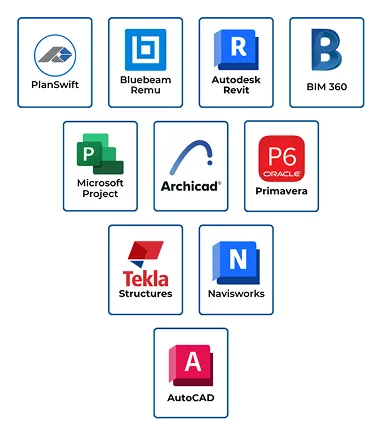
  • PlanSwift
  • Bluebeam Revu
  • On-Screen Takeoff (OST)
  • RSMeans Insulation Cost Data
  • Microsoft Excel
  • STACK Estimating
  • Autodesk Revit
  • Sage Estimating
  • ProEst
  • Xactimate
Software tools
Every Insulation Project Type and Trade

Who We Serve

Our insulation estimating services support every contractor and owner who needs specification-accurate insulation cost data before bidding begins.

Learn More
Insulation Contractors

We give insulation contractors material-specific, system-separated estimates built from drawings and specifications so every bid is code-compliant, accurately scoped, and immediately ready for submission.  

General Contractors

We give GCs complete insulation cost packages covering thermal, acoustic, mechanical, and specialty systems so subcontractor buyout starts with specification-accurate quantities covering every assembly in the building.

Home Builders

We estimate residential insulation from your architectural drawings applying IECC climate zone requirements so your insulation contractor receives code-compliant quantities for walls, attic, floor, and foundation scopes.

Mechanical Contractors

We estimate pipe and duct insulation for mechanical scopes to ASHRAE 90.1 thickness requirements, organized by pipe service type, diameter, and specified jacket system for direct procurement use.

Construction Managers

We support CMs with independent insulation quantity verification and proposal review, providing objective second opinions on every insulation subcontractor bid received throughout the project buyout process.

Industrial Facilities

We estimate industrial insulation for process piping, equipment jacketing, and tank systems using calcium silicate, foam glass, and mineral wool at industrial operating temperature specifications throughout.  

We give insulation contractors material-specific, system-separated estimates built from drawings and specifications so every bid is code-compliant, accurately scoped, and immediately ready for submission.  

Work Process

How to Get Started

A four-step workflow delivering system-accurate insulation estimates on your bid and procurement schedule.

Get Started
  1. Submit Plans

    Upload your drawings and project documents.

    01
  2. Review Scope

    We analyze every detail of your project scope using industry-standard tools, ensuring nothing is missed

    02
  3. Cost Estimate

    We build a precise, itemized estimate covering all materials, labor, and trade-specific costs.

    03
  4. Bid-Ready Delivery

    Your completed estimate lands in your inbox.

    04
See How We Work

What Our Customers Say

Samuel Price

We engaged Federal Estimating for insulation estimating on a large healthcare facility project, and the results were outstanding. Their estimate included detailed quantities for thermal insulation, acoustic insulation, and specialty systems, all clearly categorized by area and specification. The report gave our team the confidence to submit an accurate and competitive proposal. Their technical knowledge and attention to detail were evident throughout the process.

Allison Murphy

Federal Estimating provided insulation takeoffs for our multi-family residential development, and the quality of the deliverables exceeded expectations. The estimate was easy to review and thoroughly covered wall, ceiling, floor, and mechanical insulation requirements. Their precise calculations improved our material planning and reduced the likelihood of costly overruns. The service was timely, professional, and highly reliable.

Derek Lawson

Our insulation contracting company relied on Federal Estimating for a large distribution center project with a tight bid schedule. The estimate accurately quantified batt insulation, rigid board insulation, spray foam, and associated accessories. Their detailed scope review allowed us to identify several items that could have otherwise been overlooked. We were extremely pleased with the quality of work and overall experience.

Customer's Help

Frequently Asked Questions

Contact Us

Insulation estimating fees are based on project size, number of insulation systems, material complexity, and required turnaround. Residential insulation estimates for single-family homes covering batt, blown-in, and spray foam scopes typically start at $150 to $350. Commercial insulation packages covering thermal, acoustic, and mechanical pipe insulation systems on mid-sized projects range from $400 to $1,200. Industrial insulation estimates for process piping and equipment are quoted individually after reviewing your mechanical drawings. We provide a fixed price before any work begins.