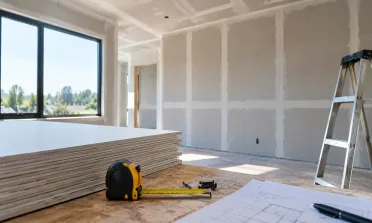
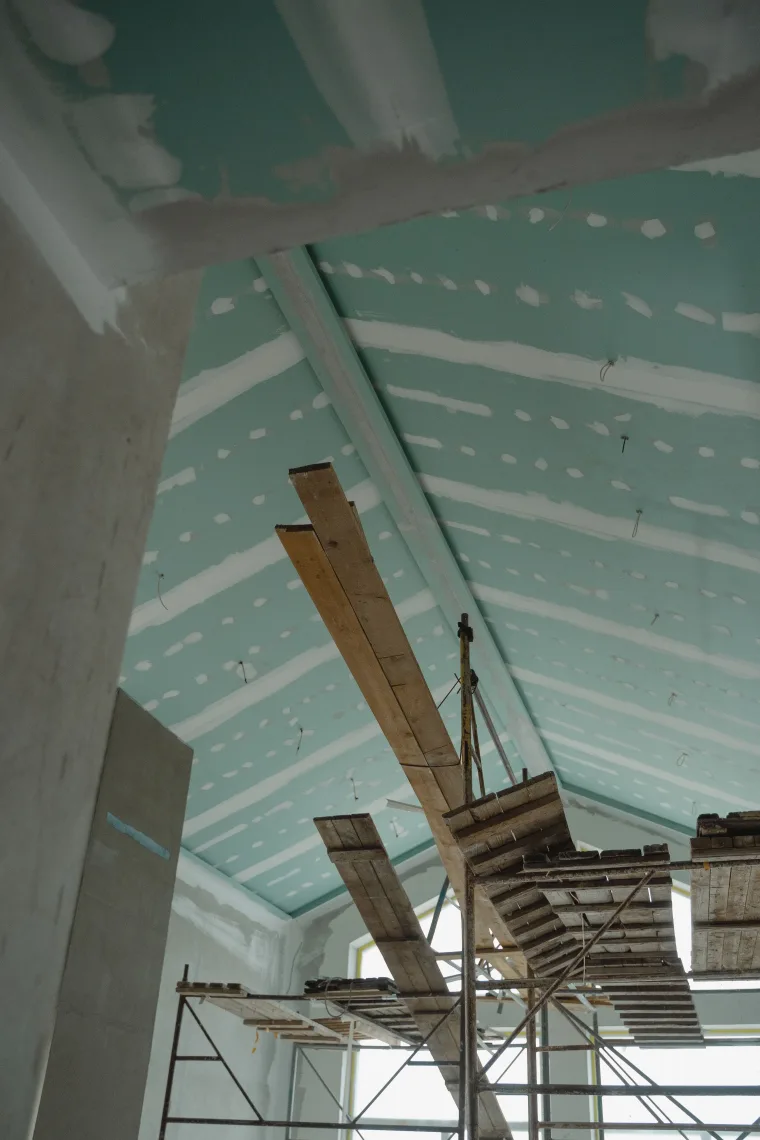
GA-214 defines six finish levels for gypsum board, Level 0 through Level 5, and the labor cost difference between a Level 2 utility finish and a Level 5 premium finish is significant on a large commercial project. Applying a single finishing labor rate across spaces with different specification requirements simultaneously understates premium space finishing costs and overstates utility area costs.
Drywall Estimating Services Covering Every Board Type and Assembly
Drywall estimates built on sheet counts alone consistently miss the most impactful cost variables. Our drywall estimating services provide contractors with complete, assembly-accurate numbers generated directly from your architectural drawings and specifications.
Why Wrong Drywall Estimates Always Cost You More
What's Included in Our Drywall Estimating Services
Tools We Use for Drywall Estimating
- The EDGE Estimating Software
- PlanSwift
- Bluebeam Revu
- On-Screen Takeoff (OST)
- RSMeans Drywall Cost Data
- STACK Estimating
- Autodesk Revit
- Microsoft Excel
- Sage Estimating
- ProEst
Who We Serve
Our drywall estimating services support every contractor and owner who needs assembly-accurate, finish-level-specific drywall cost data before bidding begins.
Get StartedHow Our Process Works
Here’s how you can get assembly-accurate drywall estimates on your bid and procurement schedule.
-
01
Submit Drawings
Upload plans and partition schedule
-
02
Review Assemblies
Confirm board types and ratings
-
03
Measure Quantities
Takeoff every drywall assembly
-
04
Deliver Estimate
Receive complete drywall package
What Our Customers Say
Frequently Asked Questions
Drywall estimating fees are based on project size, assembly type variety, finish level complexity, and required turnaround. Residential drywall estimates for single-family homes typically start at $150 to $300. Commercial drywall packages covering standard partitions, fire-rated assemblies, ceiling systems, and specialty board applications on mid-sized projects range from $400 to $1,200. Healthcare, multifamily, and large institutional drywall estimates are quoted individually after reviewing your architectural drawing set. We provide a fixed price before any work begins.
A complete drywall estimate covers every scope component from metal stud framing through final finish, stud linear footage by gauge and spacing, track quantities by floor and ceiling lineal footage, board quantities by type and layer count, screw and fastener quantities by fastening pattern, corner bead linear footage by condition, joint compound coverage by surface area, tape linear footage by joint count, and finish labor by GA-214 level. Fire-rated assemblies are estimated separately with UL assembly-specific components. Every item is referenced to a specific room and drawing location.
GA-214 is the Gypsum Association standard defining six finish levels for gypsum board surfaces. Level 0 requires no finishing, used in temporary construction. Level 1 is a single tape coat in concealed areas. Level 2 is used in utility and storage spaces. Level 3 is used in areas receiving medium or heavy texture. Level 4 is used in areas receiving flat paint in well-lit spaces. Level 5 is the highest quality finish, a skim coat over the entire surface, required in critical lighting conditions and high-gloss paint applications. Each level carries a different finishing labor rate, and misidentifying the required level on any significant surface area produces a finishing cost that is wrong before labor begins.
Fire-rated drywall assemblies per IBC Table 722 and UL design listings frequently require two layers of 5/8-inch Type X or Type C gypsum board rather than a single layer of standard board. They also specify stud gauge and spacing, screw size and pattern by layer, and in some assemblies require resilient channel between layers. Estimating a fire-rated wall as a single-layer standard board scope produces a material quantity that is half the actual board requirement, a completely wrong fastener count, and a labor estimate that understates installation time for a two-layer assembly significantly.
Residential drywall estimates for straightforward single-family projects are typically delivered within one to two business days. Commercial drywall packages covering multiple assembly types, fire-rated scopes, ceiling systems, and specialty board applications on mid-sized buildings are generally completed within two to four business days. Large multifamily, institutional, and healthcare drywall projects with extensive partition schedules and mixed assembly types are scheduled individually based on drawing volume and specification complexity. Rush delivery is available; share your bid deadline when submitting, and we will confirm our turnaround commitment before you engage us.
Yes. Renovation drywall carries cost factors that new construction estimating does not address: selective demolition of existing partitions, patching at removed partition locations, matching existing finish levels and textures in adjacent spaces, access constraints that reduce daily production rates, protection of existing finishes and occupied areas, and phased installation sequencing around building operations. We estimate renovation drywall from your architectural demolition and new work drawings, applying productivity adjustments appropriate to your access conditions so your bid reflects the true cost of drywall work in an occupied or restricted environment.
Yes. Shaft wall assemblies, including proprietary systems using 1-inch solid gypsum liner panels, C-H studs, and face board, are estimated separately from standard metal stud and drywall partitions because they use completely different components, installation methods, and labor productivity rates. We estimate shaft wall systems from your architectural drawings using the manufacturer-specific components your specification requires, USG Shaftwall, National Gypsum E-Stud, or equivalent, counting liner panel square footage, C-H stud linear footage, face board layers, and all associated accessories so your drywall contractor receives a complete, manufacturer-compliant scope document for these technically specific assemblies.
Yes. Acoustic drywall partitions targeting specific STC ratings require assembly-specific components that standard partition estimates do not include. STC-50 assemblies typically require double stud or staggered stud framing, resilient channel on one face, sound attenuation batt between studs, and multiple board layers. STC-55 and higher assemblies carry even more specific component requirements defined by the tested assembly listing. We identify the required STC rating for every demising wall and acoustic partition from your architectural drawings, confirm the assembly components per the tested listing, and estimate every component separately so your drywall contractor's acoustic partition bid reflects the full assembly cost.
Yes. Fast-track and design-build drywall estimates produced before architectural drawings are finalized are a common engagement for our team. We use schematic floor plans, preliminary room layouts, and assembly-type assumptions to produce surface-area-based estimates, and we clearly document every assumption for scope areas that aren't fully detailed. As architectural drawings develop and partition schedules, ceiling plans, and finish schedules are completed, we update the estimate to reflect the current design without requiring a complete re-measurement from scratch. This keeps your drywall budget current and accurate through every design milestone your project reaches before subcontractor bidding.