First project with us? Take 50% off your first estimate.

Claim 50% Off

BIM Clash Detection Service Providers in Louisiana

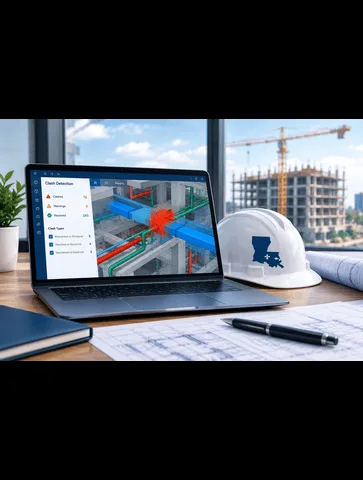
Louisiana projects come with coordination problems most states never deal with. MEP equipment sits above flood elevation, pile caps crowd underground utilities, chilled water insulation grows thicker in Gulf humidity, and the labor market is stretched thin by LNG, steel, and data center megaprojects. Our team federates your architectural, structural, and MEP models and resolves these conflicts in the model, so crews in Baton Rouge, New Orleans, Lafayette, Shreveport, and Lake Charles only have to build it once.

BIM Clash Detection Services in Louisiana
Why It Matters Here

What a Field Conflict Really Costs on a Louisiana Jobsite

Upload Your Plans
icon

Rework Hurts More When Crews Are Hard to Find

Louisiana’s industrial labor demand is expected to peak in late 2026 and early 2027, with six concurrent megaprojects taking up roughly a quarter of the state’s industrial construction workforce. When a duct runs into a beam on a hospital floor in Baton Rouge or a warehouse in Shreveport, a replacement crew may not be available for days. Catching that conflict in Navisworks costs an hour. Catching it in the field can cost you a crew you may not get back.

icon

Flood Elevation Moves the Equipment, Not Just the Building

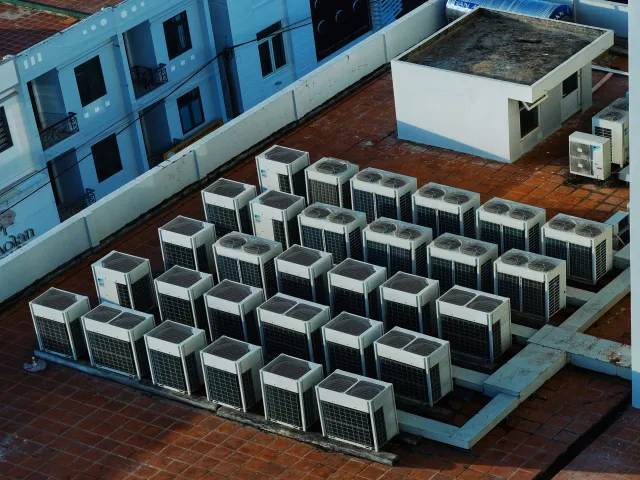
In flood-prone parishes, air handlers, switchgear, generators, and domestic water equipment usually sit above the design flood elevation, often on raised platforms or rooftops. This pushes ductwork, feeders, and piping into tighter ceiling and roof zones and adds riser routes that the original layout never planned for. We model these elevated equipment zones as a separate coordination layer, so conflicts between platforms, structure, and services come up before steel gets detailed.

icon

Gulf Humidity Thickens Every Pipe in the Ceiling

Chilled water, refrigerant, and condensate lines in Louisiana need heavy insulation and continuous vapor retarders to prevent sweating. A model drawn without that insulation thickness can look clash-free and still fail at installation. We add insulation envelopes and condensate slope requirements to clearance tests, so the space that looks open in the model is also open in the field.

Our Deliverables

Clash Detection Scope Built Around Louisiana Conditions

Hard Clashes Across Pile-Supported Foundations

Across most of South Louisiana, soft soils mean buildings sit on piles, pile caps, and grade beams. Under-slab plumbing, electrical duct banks, storm drainage, and sleeves all compete for that same space. We check hard clashes between substructure elements and underground utilities, flag sleeve locations through grade beams, and identify points where settlement joints or flexible connections need to align with the structure.
Clearance Checks Matched to Your Permit’s Code Edition

Soft-clash tolerances are only as useful as the code they reference. Louisiana’s statewide code, the Louisiana State Uniform Construction Code, has been based on the 2021 I-Codes and the 2020 NEC, and the state council is working on adopting the 2024 I-Codes and the 2023 NEC. We confirm which edition applies to your permit and set electrical working space, mechanical access, and equipment service clearances accordingly, so the coordinated model holds up at plan review and inspection.

MEP Coordination for Data Centers and Healthcare

Louisiana’s data center campuses and hospital expansions are some of the most MEP-dense buildings in the state. Stacked cable tray, busway, cooling distribution piping, medical gas, and sprinkler mains all fight for limited space. We run dedicated MEP coordination tests, system by system and against the structure, giving mechanical and electrical contractors routing they can prefabricate with confidence.

Roof Penetrations and Wind-Rated Equipment

In coastal parishes and along the I-10 corridor, rooftop units, exhaust fans, and solar racks must be anchored to stronger structural supports, and every roof-assembly penetration can leak during a storm. We coordinate equipment curbs, structural supports, roof drains, and penetrations together, so roofing, structural, and mechanical trades don’t each solve the same problem in a different spot.

Industrial Support Buildings and Site Utilities

The petrochemical, LNG, and steel facilities between Lake Charles and the Mississippi River corridor need control buildings, MCC and electrical buildings, warehouses, and administration facilities, each tied to complex site utilities. We coordinate these buildings against their foundations, underground utilities, and Civil 3D site models, catching duct bank, drainage, and foundation conflicts before excavation begins.

Ongoing Monitoring on Fast-Track Schedules

Many large Louisiana projects run design and construction in parallel, which means models get revised while crews are already working. With ongoing clash monitoring, we re-run tests on every model update, track the status of open issues, and flag new conflicts introduced by design changes. We can align the report cadence with your weekly coordination meetings on Central Time.

Built on Trusted Platforms

Tools We Use for Clash Detection

  • Autodesk Navisworks Manage
  • Autodesk BIM 360 / ACC
  • Tekla BIMsight
  • AutoCAD MEP
  • Procore BIM
  • Autodesk Revit
  • Solibri Model Checker
  • Autodesk Civil 3D
  • Trimble Connect
  • IFC OpenBIM Workflow
Software tools
Across the State

Who We Work With in Louisiana

From Shreveport to Houma, an unresolved clash eventually becomes a change order. We support Louisiana contractors, design teams, and owners with model coordination that settles spatial conflicts before mobilization.

Talk to Our Estimator

General Contractors and VDC Teams

For GCs bidding on state capital projects, parish school work, and private commercial jobs, we add coordination capacity during busy bid seasons and deliver clash reports in the format your VDC workflow already uses.

MEP Contractors

With skilled labor tight across the state, more mechanical and electrical contractors are moving work into the shop. Our coordinated routing gives you the confidence to prefabricate racks, risers, and assemblies that install cleanly on site.

Industrial and EPC Subcontractors

Contractors working on industrial projects in Calcasieu, Cameron, Ascension, and Plaquemines parishes get coordination for support buildings and site utilities, prioritized by construction sequence.

Architects and MEP Engineers

Design firms in Baton Rouge, New Orleans, and Lafayette use our reviews during design development to resolve flood-elevated equipment and wind-rated roof coordination before bid, when the fix is still just a drawing revision.

Structural Engineers

We check pile caps, grade beams, and elevated equipment platforms against architectural layouts and MEP penetrations, catching sleeve and support conflicts while the structural design can still change.

Owners and Institutions

Hospital systems, universities, port authorities, and data center developers use our independent clash detection as an owner-side quality check at key milestones, before conflicts turn into schedule and budget problems.

Fire Protection and Specialty Trades

Sprinkler, fire alarm, low voltage, and building automation contractors get routing confirmation against structure and other MEP systems, so the layout submitted for fire marshal review is also the layout that is installed.

Work Process

How Louisiana Projects Move Through Our Coordination

From raw model files to a resolution plan that accounts for local site and code conditions.

Get Started
  1. Model Intake and Local Constraint Review

    We review the architectural, structural, civil, and MEP models, then verify the jurisdiction, code edition, flood requirements, and wind design criteria.

    01
  2. Federation and Test Setup

    We combine models in Navisworks or your platform and run clash and clearance tests for insulation, elevated equipment, and underground utilities.

    02
  3. Review and Prioritization by Install Sequence

    We filter false positives, group duplicates, and prioritize clashes by construction sequence, from piles and underground utilities to upper floors.

    03
  4. Reports and Re-Runs

    We deliver clash viewpoints, element IDs, assigned responsibilities, and resolution status, then re-run tests with each model update.

    04
See How We Work
Get In Touch With Professionals

Discuss Your Plans with Our Team

David Kay
Vice President

David Kay

With nearly a decade of hands-on experience in construction cost estimating, David has helped hundreds of contractors, subcontractors, and developers across the USA and Canada bid smarter, win more, and build profitably. Working with industry-standard tools including Bluebeam, PlanSwift, and RSMeans, David brings the same level of precision and speed to every estimate, whether it's a single-trade subcontractor bid or a full commercial project breakdown.

Client Testimonials

Edward John

Our hospital expansion had flood-elevated air handlers and a ceiling packed with medical gas, sprinkler mains, and chilled water. Federal Estimating’s coordination caught conflicts between the equipment platforms and the main duct runs before steel detailing was complete. That saved us a redesign we would have discovered during rough-in.

Samuel David

We needed clash detection for an electrical building and its site utilities on an industrial project. The team checked our duct banks and drainage against the foundations and flagged several conflicts before excavation. The reports were organized by installation sequence, which made our coordination meetings much faster.

Alfred Jasper

Pile caps and grade beams were fighting with under-slab plumbing on our construction project type. Federal Estimating mapped every sleeve location and identified the conflicts our team had missed. With tight labor availability this year, avoiding field rework mattered a lot to us.

Customer's Help

Frequently Asked Questions

Contact Us

No. Clash detection is model-based work, so we receive files through Autodesk Construction Cloud, BIM 360, Trimble Connect, or a direct transfer, and return coordinated reports the same way. Our team can join your coordination meetings virtually on Central Time, so your Louisiana project team gets the same review cycle whether the job is in Monroe or Morgan City.