
First project with us? Take 50% off your first estimate.

Claim 50% Off

Roofing Estimating Services in New York for Rooftops and Upstate Winters

Are you bidding a flat roof in Queens and wondering how the sustainable roofing zone rules change your quantities? A generic takeoff rarely answers that question, and it is the kind of gap that turns into a change order after award.

Our roofing estimating services in New York are built around the rules, climate, and cost conditions that shape roofs here. A roof replacement in the five boroughs follows the 2022 New York City Building Code and Local Laws 92 and 94 of 2019. A school roof in Syracuse or Rochester brings snow, ice, and prevailing wage questions instead. We write each estimate for the site, then deliver it as a takeoff your team can bid from.

For the full scope of what we measure and deliver on any roof, see our nationwide roofing estimating services page. This page covers what changes when the roof is in New York.

Freelance Estimating Services

Why New York Roofs Need a Different Kind of Estimate

New York has several distinct estimating challenges. The five boroughs are dense, heavily regulated, and hard to access. Upstate is shaped by snow and ice. Long Island and the Hudson Valley mix coastal wind exposure, older homes, and institutional buildings. Here is what we account for in each. 

  1. NYC Building Code and Chapter 15 Roof Assemblies

    The 2022 New York City Building Code took effect on November 7, 2022. Its Chapter 15 covers roof assemblies and rooftop structures, including wind resistance and roof drainage. When scuppers serve as secondary overflow drainage, for example, the code addresses their quantity and size. Those details change what we count. Drains, scuppers, leaders, and overflow components belong in the takeoff as line items, not in a lump allowance. That approach gives your team a basis for comparing drainage quotes from subcontractors, because every component is visible and can be checked.

  2. Local Laws 92 and 94 and the Sustainable Roofing Zone

    Local Laws 92 and 94 of 2019 require new buildings, enlargements, and complete roof deck or roof assembly replacements in New York City to include a sustainable roofing zone: solar photovoltaic panels, a green roof, or both. The Department of Buildings sets the solar minimum at 4 kW and excludes areas such as rooftop structures, mechanical equipment, and parapets. We separate the zone from the excluded areas and flag where work would sit. Landmarked buildings are not exempt. Structural capacity is listed as an exclusion for your engineer to confirm.

  3. Cool Roof Requirements on Replacements

    Roof recovering and roof replacement work in New York City must also meet the cool roof provisions of section 1504.9 of the building code, unless the work falls under the small-area exception in the Administrative Code. We check the specified membrane against those provisions first. A non-compliant membrane on a bid set is a scope question worth raising before you price it, not after. Raising it early protects your margin and your schedule, because a membrane substitution after award can change material cost, warranty terms, lead times, and flashing details.

  4. Snow, Ice, and Lake-Effect Weather Upstate

    Outside New York City, the Building Code of New York State and the Residential Code of New York State apply, and ground snow loads depend on location. Buffalo, Rochester, and Syracuse sit in lake-effect territory, where a heavy winter can pass 100 inches of snow. We confirm the ice barrier underlayment requirement for the town on your bid, since it is listed by the municipality. On steep-slope roofs, we count ice and water shield at eaves, valleys, and penetrations from the plans. Snow load design stays with the engineer of record.

  5. Energy Code Insulation on Replacement Roofs

    Replacement roofs in New York must meet the energy code's insulation and air barrier requirements. That means the New York State Energy Conservation Construction Code outside the city and the New York City Energy Conservation Code inside it. Added insulation raises material and labor costs and changes thickness at parapets, curbs, and flashing heights, so we carry it through the whole takeoff and estimate, including tapered insulation for drainage. Fasteners, cover board, and termination details often change with insulation depth, so we recheck them against the specified assembly before pricing.

  6. Prevailing Wage on Public Work

    Schools, municipal buildings, and other public work in New York fall under Article 8 of the New York State Labor Law. Contractors must pay the prevailing rate of wages and supplements, which usually track union scale. Rates take effect each July 1, and New York City public works uses rates set by the City Comptroller. Overtime is typically owed after eight hours in a day and on weekends. When you flag a job as public work, we price labor on that basis and state the rate assumption in the estimate.

What Our New York Roofing Estimates Cover

Every estimate is built from your plans and specifications. On New York projects, these are the items that get extra attention:

You receive an itemized material and labor breakdown with inclusions and exclusions stated. If the scope also includes insulation or waterproofing at parapets and terraces, we can price those with the roof through our thermal and moisture protection estimating services.

Send Your Plans
  • Sustainable roofing zone areas and excluded areas on NYC low-slope roofs
  • Cool roof-compliant membrane, field area, and flashing quantities
  • Tapered insulation, crickets, and drain sumps
  • Primary and secondary drainage, including drains, scuppers, leaders, and overflow components
  • Parapets, coping, counterflashing, and wall terminations on masonry buildings
  • Rooftop equipment curbs, plus pipe and duct penetrations with their flashings
  • Ice and water shield, drip edge, starter, and ridge components on steep-slope roofs
  • Tear-off and disposal, including older buildings that carry more than one existing roof layer
  • Access and hoisting allowances for tall or tight-access sites, listed as separate lines so you can adjust them

Roof Systems We Estimate in New York

Flat and Low-Slope Roofs on Multifamily and Mixed-Use Buildings

Flat and Low-Slope Roofs on Multifamily and Mixed-Use Buildings

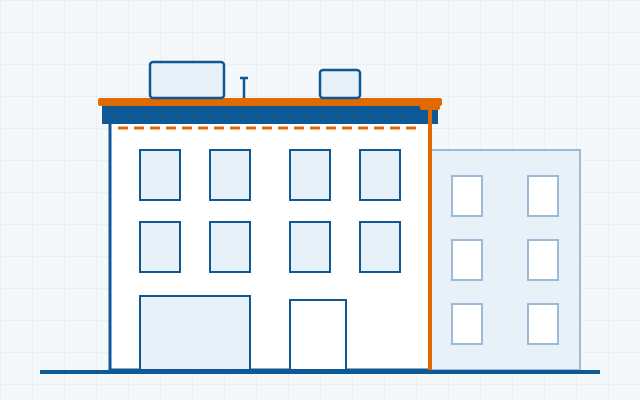
Walk-up apartment buildings, mixed-use corridors, and co-ops across the boroughs depend on low-slope roofs. Built-up and modified bitumen systems remain common on older buildings, while single-ply membranes such as TPO, EPDM, and PVC are common on newer work. We estimate tear-off, insulation, cover board, flashing, and drainage details for each.
Commercial and Industrial Roofs

Commercial and Industrial Roofs

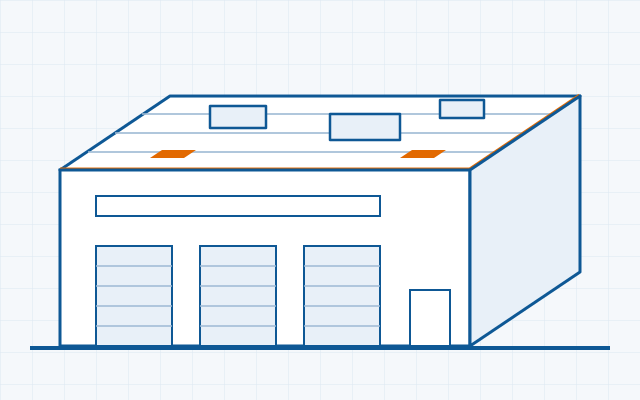
Warehouses, retail centers, schools, and industrial buildings bring large roof areas, perimeter details, and many rooftop penetrations. We measure these from the plans, group the quantities by roof section, and show perimeter and equipment details separately. That structure makes it easier to compare subcontractor quotes line by line.

Steep-Slope Roofs on One- and Two-Family Homes

Steep-Slope Roofs on One- and Two-Family Homes

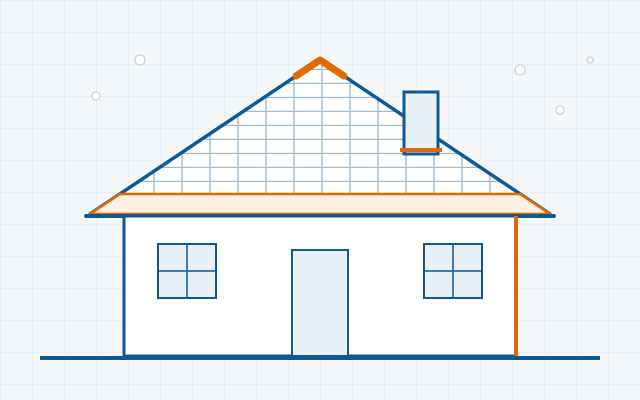
Queens, Staten Island, Long Island, Westchester, and the Hudson Valley include many one- and two-family homes with steep-slope roofs. We estimate asphalt shingle and standing seam metal systems, with ice barrier, underlayment, and ridge ventilation counted by roof plane. Slate and copper on prewar and historic buildings are priced from supplier quotations, because quantity is only part of the cost of specialty materials.

Where We Provide Roofing Estimating Services in New York

  • New York City (Manhattan, Brooklyn, Queens, the Bronx, and Staten Island)

    Local Laws 92 and 94, cool roof provisions, Landmarks Preservation Commission projects, and tight access.

  • Long Island (Nassau and Suffolk)

    Coastal wind exposure, older housing stock, and commercial corridors.

  • Westchester and the Hudson Valley

    A mix of residential, institutional, and historic roofs.

  • Capital Region (Albany and Schenectady)

    State and municipal work, where prevailing wage rules often apply.

  • Central New York (Syracuse and Utica)

    Lake-effect snow and institutional roofs.

  • Western New York (Rochester and Buffalo)

    Heavy snow belts and older industrial buildings.

Who We Prepare New York Roofing Estimates For

  • Roofing Contractors

    Bidding NYC, Long Island, or upstate work and needing quantities faster than internal staff can produce them.

  • General Contractors

    Assembling bid packages and wanting roofing exclusions flagged before submission.

  • Co-op and Condo Boards and Property Managers

    Wanting an independent quantity check against contractor proposals.

  • Developers and Architecture Firms

    Pricing a sustainable roofing zone scope during design, before drawings are final.

How We Work on New York Projects

Send Your Plans
  1. Send your plans and the location

    Tell us the borough or county, whether the job is private or public work, and your bid date.

  2. We review the scope against local conditions

    We look at code triggers, existing roof layers, access, and snow or wind exposure.

  3. We build the takeoff and estimate

    We use Bluebeam, PlanSwift, and RSMeans cost data, adjusted to the New York location of the job.

  4. We deliver a bid-ready package

    Assumptions and exclusions are stated clearly in PDF or Excel. Structural capacity for solar or green roof loads stays with your registered design professional, and we mark it as an exclusion.

Send Your Plans

Why New York Contractors Work With Federal Estimating

Our estimating team is led by David Kay, Vice President, who has nearly a decade of construction cost estimating experience and has supported contractors, subcontractors, and developers across the USA and Canada.

We are an estimating firm, not a roofing contractor. We do not install roofs, so our quantities are never shaped by a crew schedule or a material sale. Our office is in Austin, Texas, and we work remotely with contractors nationwide. What we bring to New York work is a code-aware process, local cost data, and clear assumptions, not a storefront. Your plans and pricing stay confidential.

You can review the format and level of detail in our sample estimates before you send a project.

  • An estimating firm, not a roofing contractor
  • Code-aware process and local cost data
  • Clear assumptions and stated exclusions
  • Your plans and pricing stay confidential
View Sample Estimates
David Kay, Vice President
David Kay Vice President

Frequently Asked Questions

Yes, when the project triggers them. For new buildings, enlargements, and complete roof deck or roof assembly replacements, we identify the sustainable roofing zone, separate the excluded areas, and note where solar or green roof work would apply. Structural capacity and the Department of Buildings compliance form stay with your registered design professional.

Get Your New York Roofing Estimates

Send us your plans, tell us where the roof is, and we will return a takeoff built for New York conditions.